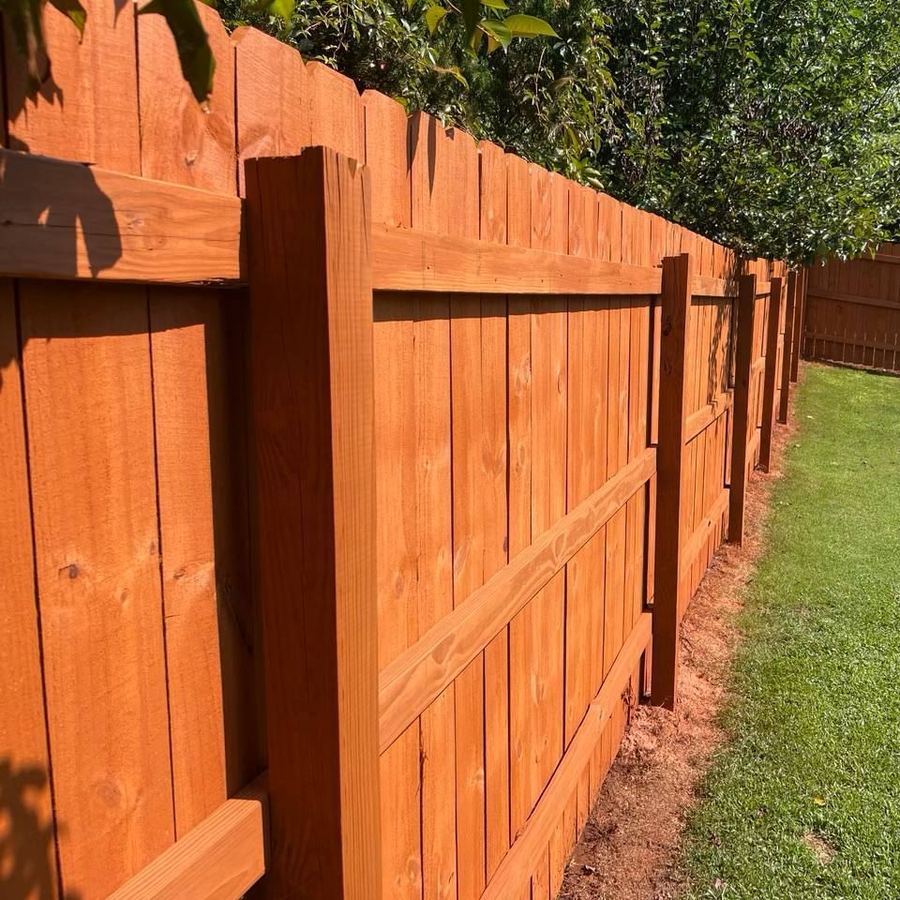
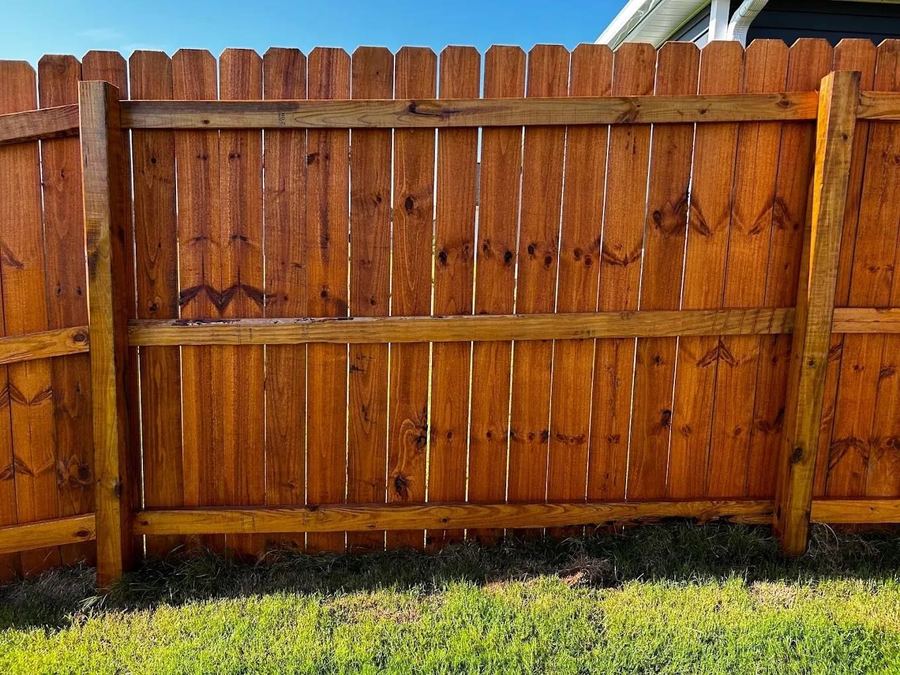
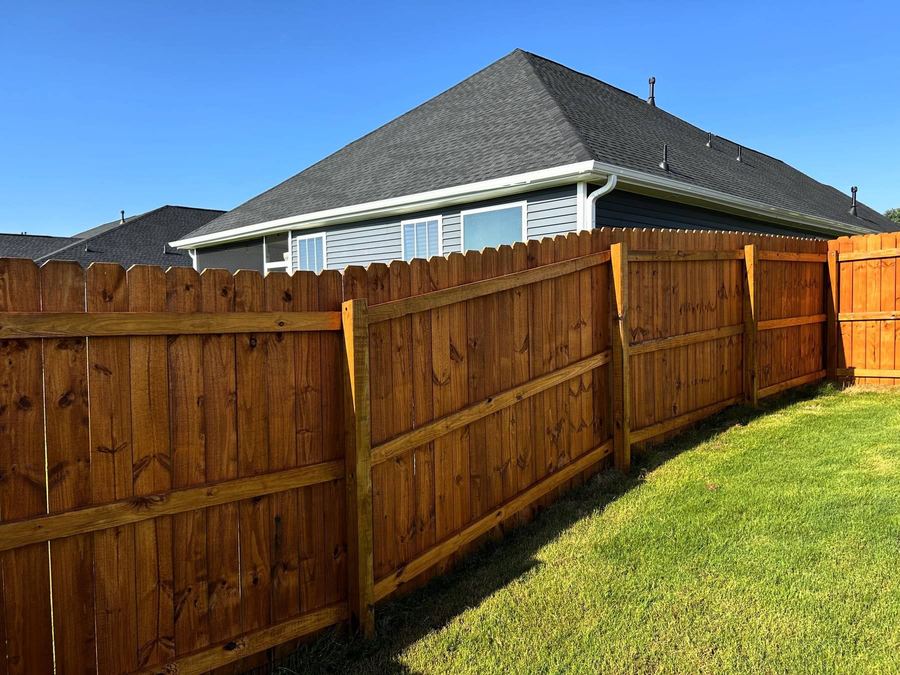
When is the best time to stain a fence?
Fall is the sweet spot in the Upstate, and winter works with oil on dry wood. Temperature, moisture, and rain windows for fences in Greenville, Spartanburg, and Greer.
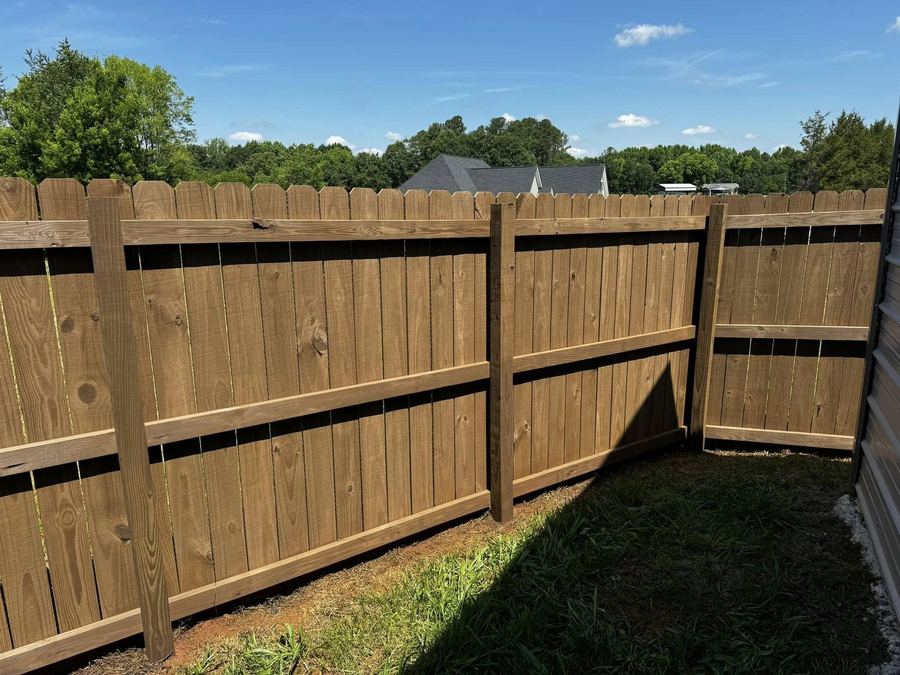
Spring and fall are the easy answer, and they are not wrong: moderate temperatures, less brutal humidity, fewer pop-up storms. But the calendar is the second gate.
The first gate is the wood. A dry fence in February beats a soaked fence in April, and we have stained fences in every month of the year when conditions lined up.
Temperature
Temperature is the first hard rule. Most manufacturers want application somewhere around 50 to 85 degrees Fahrenheit, with the surface temperature of the wood in range too, not just the air.
A 60-degree morning on a fence that sat in frost all night is not a 60-degree fence. We check the product sheet and the boards, not just the weather app.
Moisture
Moisture is the second hard rule. Oil-based stain wants wood below 13% moisture, and we check with a meter on every estimate. After a week of Upstate rain, boards can hold water longer than they look like they do.
Stain over damp wood and you trap moisture under the finish: blotch now, peel later. The meter turns a guessing game into a yes or no.
Season by season
Season by season in the Upstate: spring is prime time but you are dodging rain weeks and pollen dumps that coat everything yellow. Summer works early and late in the day but brings 3 p.m. storms and boards too hot to touch at noon.
Fall is the sweet spot: dry air, stable temps, and wood that has had all summer to dry. Winter is possible with oil-based products when the wood is dry and a mild week shows up.
Late fall: is it too late to stain?
Usually not. Late fall in Greenville and Spartanburg still brings dry, mild stretches, and a fence that dried out all summer often meters well this time of year.
Leaves and pine straw are the main nuisance. They get blown off and the boards cleaned before any stain goes on, because stain over debris is stain that never touched the wood.
Shorter days change the schedule more than the stain does. We start a little later, once the boards have warmed and any dew has burned off, and we stop early enough that the stain has daylight to soak in before the evening drop.
If the forecast turns cold and wet, the job waits for the next window. Oil-based stain handles our winters better than most people think: see what really matters for staining in cold weather. A fence stained now is protected before spring pollen and the summer sun.
Time of day matters as much as the month. Staining in blasting afternoon sun flashes the solvents before the stain can penetrate, which leaves lap marks and weak spots. We work the shade line: follow the shadow around the fence, or hit the deck floor in the morning and the rails in the afternoon.
It is slower than spraying everything at noon. It is also why the finish looks even.
Rain, new wood, and old wood
Rain is the schedule killer in both directions. You cannot stain ahead of a wash-off rain, and you cannot stain right after one until the wood dries back down. How long that takes depends on sun, wind, and humidity: sometimes a day, sometimes three.
This is why we say weather moves jobs. A contractor who promises an exact date in a stormy month is promising something the sky controls.
New fences and old fences run on different clocks. A new pressure-treated fence is waiting on moisture, which can mean weeks.
An old grey fence is waiting on a wash and then dry time after the wash. Either way, the answer to "when" is the same: when the meter says so, inside the temperature window, with no rain coming.
The practical move: if you are trying to beat summer damage, book early. A slot in March is worth more than a panicked call in July, because spring schedules have room to slide around weather and July schedules do not.
The fence does not care what month it is. It cares that it is dry, clean, and protected before the worst sun and storms of the year arrive.
Want us to watch the weather for you? Send the form or call 864-800-8275.
We will meter the wood at the estimate, put you on the schedule, and take the first real window. Greenville, Spartanburg, Greer, Duncan, Simpsonville, Mauldin, and Taylors.
Common questions
What is the best month to stain a fence in South Carolina?
In the Upstate, fall is the sweet spot: dry air, steady temperatures, and wood that has had all summer to dry. Spring works too, between the rain weeks and the pollen. We stain in every month of the year when the wood is dry and the weather lines up.
What temperature do you need to stain a fence?
Most stain makers want about 50 to 85°F, and that means the wood, not just the air. A board that sat in frost all night is colder than the forecast says. We follow the product sheet for the stain we are using.
Can you stain a fence in the winter?
Yes, with oil-based stain, on a dry, mild day when the wood meters under 13% and no hard freeze or rain is coming right behind it. It takes longer to cure in the cold. Water-based stain should not go on in freezing weather. More in our winter staining guide.
How long after rain can you stain a fence?
Sometimes a day, sometimes three. It depends on the sun, the wind, and the humidity. We go by the moisture meter, not the clock.
How often should you stain a fence?
In Greenville, Spartanburg, Greer, and Duncan we usually recommend every 3 to 4 years. Depending on the stain, the opacity, the sun, and the wood, some finishes run 2 to 6 years.